
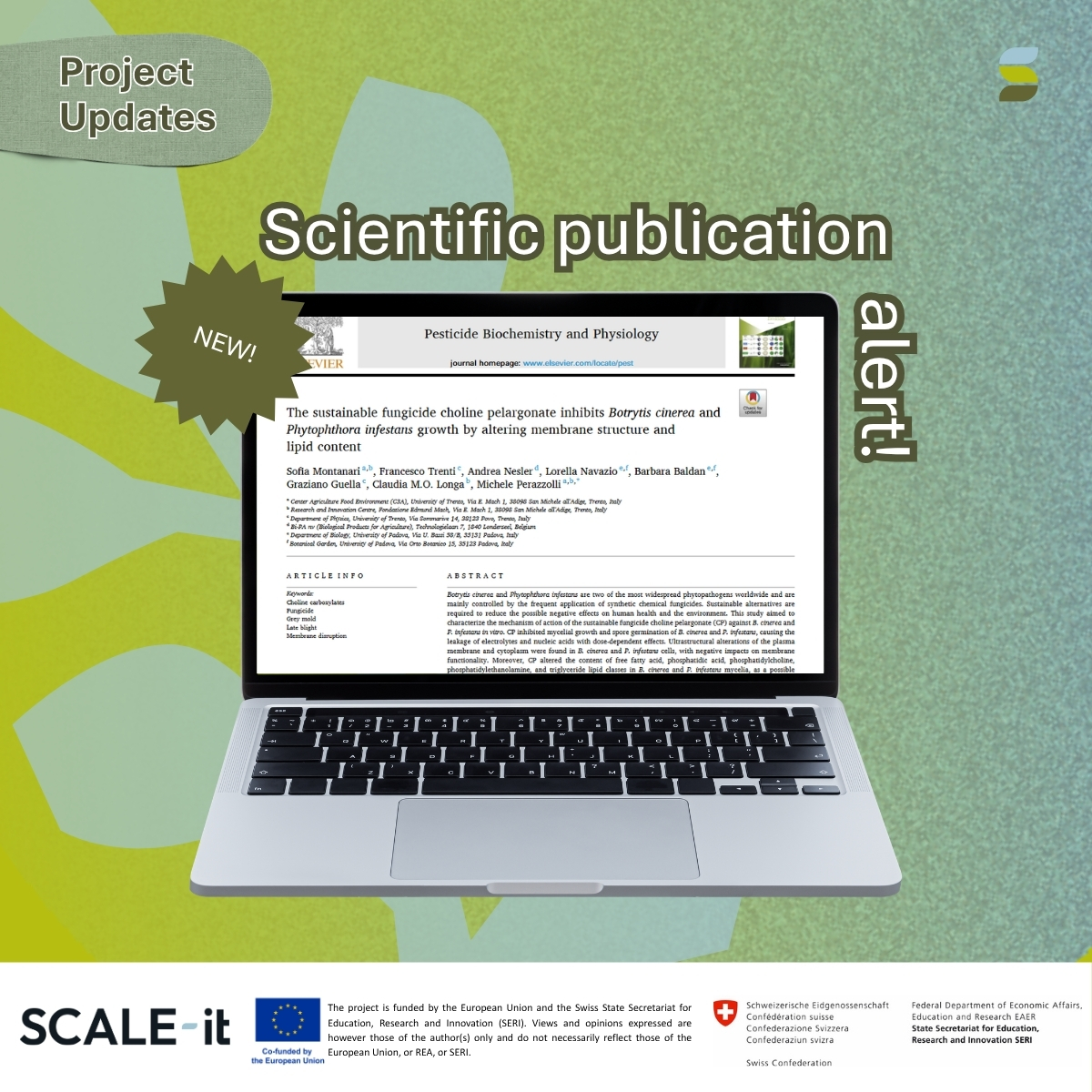
A new study supported by the SCALE-it project, titled “The grapevine microbiota: A review on the possible impacts of plant protection programs on phyllosphere microorganisms”, has been published by researchers from the University of Trento, Fondazione Edmund Mach and Laimburg Research Centre in the Annals of Applied Biology journal.
The article reviews current knowledge on how plant protection programmes and alternative fungicides may affect the bacterial and fungal communities naturally associated with grapevine leaves, bunches and wood. The findings indicate that grapevine microbiota is primarily shaped by factors such as plant compartment, vineyard location and sampling time, while plant protection programmes generally have only a minor impact on microbial community composition. The review also highlights evidence that more sustainable plant protection approaches may help preserve microbial biodiversity, while calling for further long-term research to better understand the effects of both chemical and biological fungicides on non-target microorganisms.
The article is open access and available in the scientific publications section of the SCALE-it website as well as in the project’s dedicated Zenodo community.
About SCALE-it project
SCALE-it runs for 48 months and is funded under the European Union’s Horizon Europe programme (2021-2027), with co-funding from the Swiss State Secretariat for Education, Research and Innovation (SERI). The project is coordinated by FiBL Europe, with scientific leadership from FiBL Switzerland.
